Infinity Modular Cat Tree Tower: Flexible Vertical Play
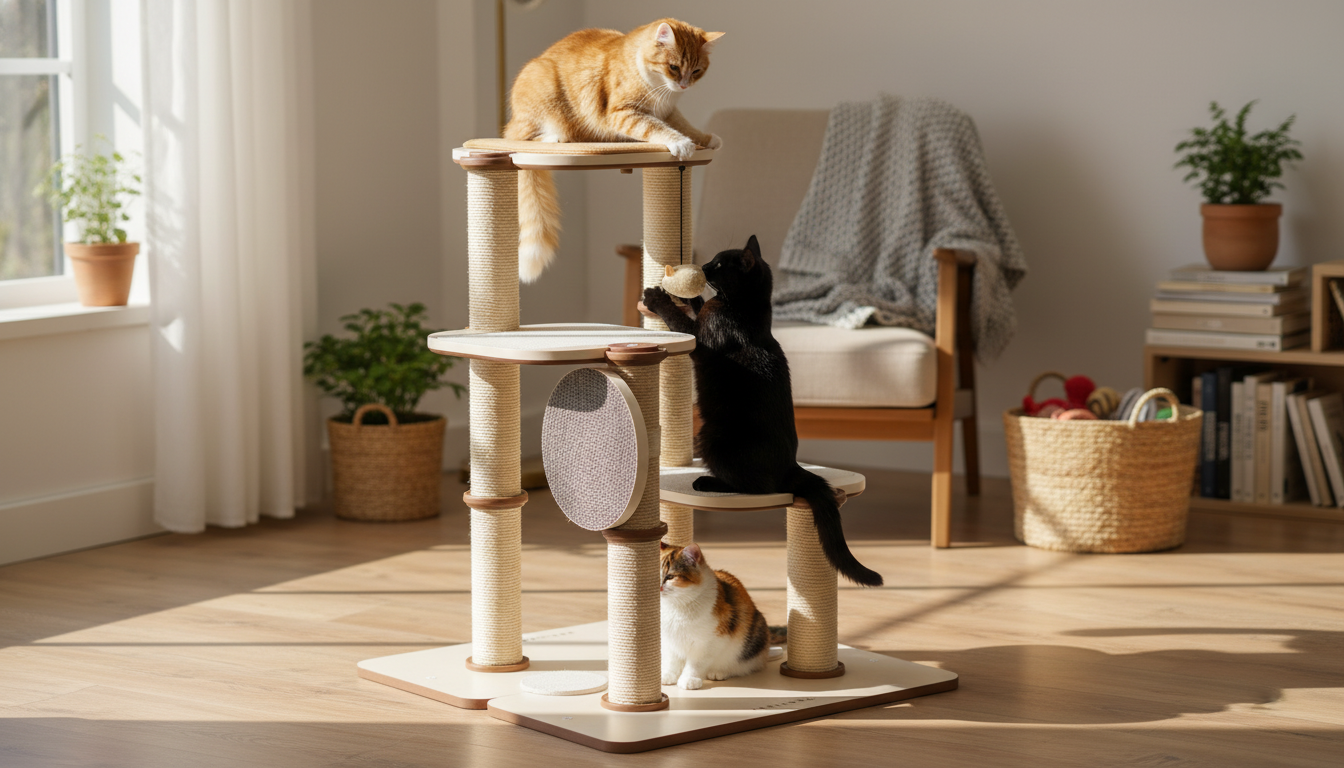
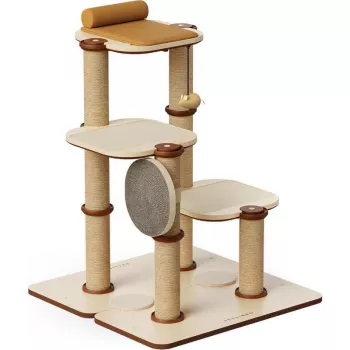
Infinity Modular Cat Tree Tower
A modular cat tower can turn vertical space into climbing routes, lookout spots, and nap zones—while keeping a home’s layout flexible. The Infinity Modular Cat Tree Tower is designed for households that want a configurable setup that can evolve with a cat’s age, energy level, and available floor space.
What Makes a Modular Tower Different
Traditional cat trees usually arrive as one fixed shape: a base, a few platforms, and maybe a cubby or two. A modular tower takes a different approach—one that’s especially useful when a cat’s habits (or a room’s layout) change.
- Reconfigurable layout: Modules can be arranged to match a room’s corners, windows, or open walls, so the tower fits the space instead of forcing the room to fit the tower.
- Better long-term fit: Add or rearrange levels as a kitten becomes an adult, or as mobility needs change over time.
- More usable territory for multi-cat homes: Distributing platforms can reduce crowding and competition around the “best seat in the house.”
- Easier planning for small spaces: Vertical stacking can reclaim floor area compared to wide, fixed-base trees.
For a deeper look at what indoor cats need from their environment—perching, scratching, hiding, and play—see the American Association of Feline Practitioners (AAFP) Feline Environmental Needs Guidelines.
Infinity Modular Cat Tree Tower at a Glance
The Infinity tower is built around a vertical footprint, intended to support climbing, perching, and resting without spreading across the room. A tower-style profile is often easier to place near a window or along a wall—two locations that naturally encourage frequent use.
| Detail | What to know |
|---|---|
| Product | Infinity Modular Cat Tree Tower |
| Price | 371.17 USD |
| Availability | In stock |
| Best placement | Near a window, along a wall, or beside a sturdy corner |
Choosing the Right Setup for Your Cat
The most “correct” configuration is the one your cat actually uses. A good starting point is to watch daily patterns: where your cat likes to rest, what they climb, and whether they prefer leaping or carefully stepping.
- For high-energy climbers: Prioritize a steeper route upward with short gaps between platforms to encourage jumping and scrambling. A higher perch near a window can become a daily destination.
- For cautious or older cats: Create a “stair-step” path with smaller height changes and a reliable resting spot at mid-level. The goal is confident movement, not big athletic jumps.
- For multi-cat households: Plan at least two distinct routes (up/down) to reduce bottlenecks and guarding. Even a small alternative platform can help one cat wait without blocking access.
- For scratch preferences: Place scratch-friendly surfaces near the main traffic path so scratching happens on the tower, not the sofa—especially right after waking or after play.
International Cat Care offers practical guidance on building variety and choice into an indoor setup; their overview on environmental enrichment for cats is a helpful reference for planning climbing and resting zones.
Room Placement and Safety Basics
Even the best tower layout won’t get much use if it feels unstable or if the approach is stressful. Placement is where comfort and safety meet.
- Stability first: Place the tower on a flat surface and avoid soft, uneven rugs that can introduce wobble. If your cat tests it and feels movement, they may avoid it.
- Create a safe “fall zone”: Keep the immediate area clear of sharp-edged furniture and hard décor. A clear perimeter also makes zoomies safer.
- Mind the window: A window-adjacent perch can be a strong motivator, but avoid placing it where blind cords are accessible.
- Traffic flow: Keep a comfortable path around the base so cats can approach from multiple directions without feeling trapped or cornered.
For more indoor-lifestyle ideas—especially for preventing boredom—ASPCA’s tips on enriching your cat’s life pair well with a vertical setup like a modular tower.
Modular Layout Ideas
Modularity shines when you design around daily routines: morning sunbeams, afternoon napping, evening play. These layout ideas can be adapted as you learn what your cat prefers.
| Configuration | Good for | Why it helps |
|---|---|---|
| Stair-step ascent | Seniors, cautious cats | Smaller jumps and more frequent rest points |
| Compact vertical stack | Apartments, narrow rooms | Maximizes height with minimal floor use |
| Split-route layout | Multi-cat homes | Reduces conflict by offering alternate paths |
| Window-facing perch | Indoor-only cats | Adds visual stimulation and routine engagement |
Keeping the Tower Appealing Over Time
When a Modular Tower Is the Best Choice
Shop Related In-Stock Picks
- Infinity Modular Cat Tree Tower — a configurable tower footprint for climbing, perching, and lounging.
- 59″ Wooden Dog Crate Furniture for 2 Dogs, Double Rooms with Drawers & Divider — a furniture-style crate option for multi-pet households that want storage and structure.
- Luxury Large Capacity Bowling Shoulder Bag with Sausage Dog Pendant — a roomy everyday bag for pet parents who like playful details.
FAQ
Is a modular cat tower suitable for older cats?
Yes—configure it with shorter steps between platforms, include mid-level resting spots, and avoid large jumps so climbing remains comfortable.
Where should a cat tower be placed to get the most use?
Near a window or in a social area where the cat already spends time; keep it stable on a flat surface and provide clear approach paths.
How can a cat tower reduce scratching on furniture?
Position scratch-friendly areas on the cat’s main route and near resting zones, reward use with treats, and keep the scratching surfaces clean and accessible.










Leave a comment