Tall Cactus Cat Tree: Stable Height for Big Cats
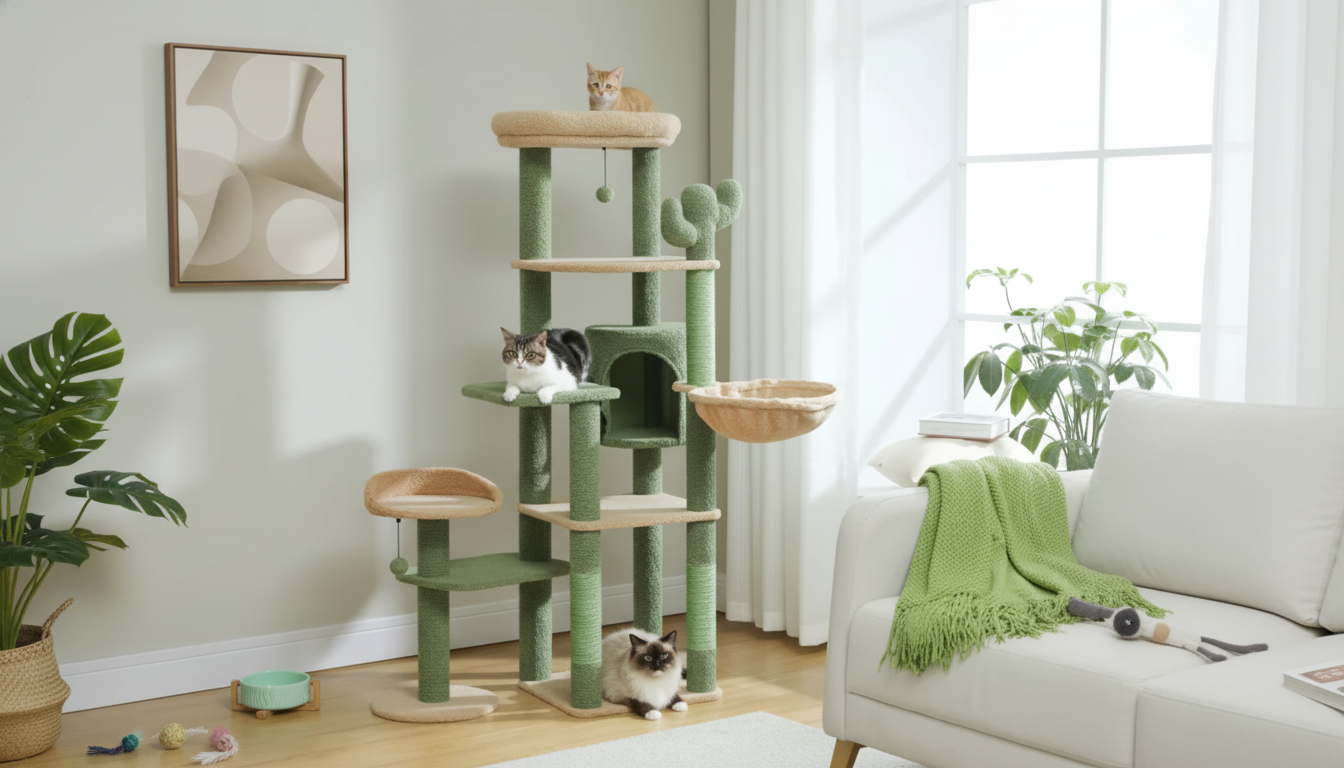
Why tall cactus-style cat trees work so well indoors
A tall cat tree with a cactus silhouette isn’t just a cute accent—it’s a practical way to give indoor cats more “territory” without taking over your floor plan. Cats naturally look for elevated spots to watch what’s happening, relax out of reach, and move between perches. When that vertical space is built into a single, sturdy tower, it can reduce boredom and help keep everyday cat energy from spilling onto shelves, countertops, and curtain panels. For more guidance, see Dining with ants and discovering the giant wine glass cat tree.
Height also helps in multi-cat homes. Multiple levels create natural zones—one cat can nap in a cubby while another claims the top perch, and a third scratches at the post without all three trying to occupy the same square foot. A dedicated scratch surface is especially valuable for protecting rugs and furniture, and it aligns with common behavior guidance that scratching is a normal need to redirect rather than punish. If you’re focused on humane scratch management, the American Veterinary Medical Association (AVMA) position on declawing offers helpful context about why providing alternatives matters. For further reading, see Globlazer Cactus Heavy Duty Cat Tree, 74in Tall Sturdy Cat Tower ….
Compared with traditional carpeted towers, a cactus-style look often blends into living rooms and open-plan spaces more easily. That makes it simpler to place the tree in a high-traffic area—exactly where cats prefer it—rather than hiding it in a spare room that rarely gets used.
What to look for in a tall cat tree for larger cats
Big cats and enthusiastic climbers put a cat tree’s design to the test. If the tower wobbles, platforms are cramped, or the steps are awkwardly spaced, many cats will avoid the higher levels—even if the tree looks great in the room.
Stable base
A wide, heavy base is the difference between “confident leaps” and cautious half-climbs. Larger cats generate more lateral force when they jump and twist. A stable footprint reduces tipping risk and keeps the top perch usable instead of intimidating.
Platform size and edge support
Bigger cats need room to turn around and loaf comfortably. Look for platforms that are wide enough for a full curl-up, with some kind of edge support so a cat doesn’t feel like they’ll slide off when settling in.
Post thickness and scratching coverage
Thicker posts tend to feel more secure and hold up better over time, especially if multiple cats scratch daily. More scratchable surface area also helps prevent competition—one cat can claim a post without “guarding” the only scratching spot in the house.
Materials and finish
Low-shed fabrics make routine cleanup easier, and tightly wrapped sisal or rope generally lasts longer than loosely wound material that starts fraying quickly. For homes with heavy scratchers, durability is a day-to-day quality-of-life feature.
Safe height and layout
The tallest option isn’t automatically the best. The climb should feel natural: staggered steps that are reachable without risky leaps, and a top perch that doesn’t sway. For cats that are older, less agile, or simply cautious, prioritize a secure “ladder” layout over maximum height. The American Association of Feline Practitioners (AAFP) Feline Behavior Guidelines also emphasize the value of providing appropriate environmental resources—vertical space included—to support well-being.
Easy assembly
Fewer parts, clear labels, and well-aligned pre-drilled holes reduce the chance of subtle misalignment. Even a small twist during assembly can translate into long-term wobble, especially on taller trees.
Quick comparison: tall cat tree features that matter day-to-day
| Feature | Why it matters | What to prioritize for large cats | Notes |
|---|---|---|---|
| Base footprint | Controls tipping and wobble during jumps | Wider/heavier base | Place on a flat surface; avoid thick shag rugs |
| Perch size | Comfort and confidence at height | Wide platforms with edge support | Add a thin mat if a perch feels slippery |
| Scratching surface | Redirects scratching; reduces wear on furniture | More coverage and thicker posts | Trim loose rope ends before they unravel |
| Level spacing | Determines how safely cats climb | Staggered, reachable steps | Helpful for seniors if steps are closer |
| Enclosed hideout | Stress relief and naps | Roomy interior | Not required if cats prefer open perches |
| Cleaning ease | Less odor and dander buildup | Low-shed fabric; accessible surfaces | Vacuum weekly; spot-clean as needed |
Placement and setup tips for maximum use
Care, cleaning, and longevity
A tall cactus option designed for bigger climbers
If you’re shopping for a cactus-style tower built with bigger climbers in mind, consider the Cactus Tall Cat Tree for Large Cats. For pet households that also want furniture-style containment solutions in shared spaces, the 59″ Wooden Dog Crate Furniture for 2 Dogs, Double Rooms with Drawers & Divider is another home-friendly option to keep in mind for a coordinated look.
FAQ
Is a tall cat tree safe for large cats?
Yes when the base is wide, platforms are stable, and the level spacing allows controlled climbing. Place it on a flat surface and re-tighten hardware after the first week so it stays secure as it settles.
Where should a tall cat tree be placed in an apartment?
Place it near a window or a common family area where your cat already spends time. Keeping one side near a wall or in a corner can improve confidence and help the tree feel steadier.
How do you keep a cactus cat tree from wobbling?
Tighten all bolts, make sure the base sits flat, and avoid placing it on thick rugs that create uneven support. Corner placement and non-slip pads under the base can also reduce movement for active jumpers.









Leave a comment