Pink Flower Cat Tree: Thick Sisal Post & Removable Perch
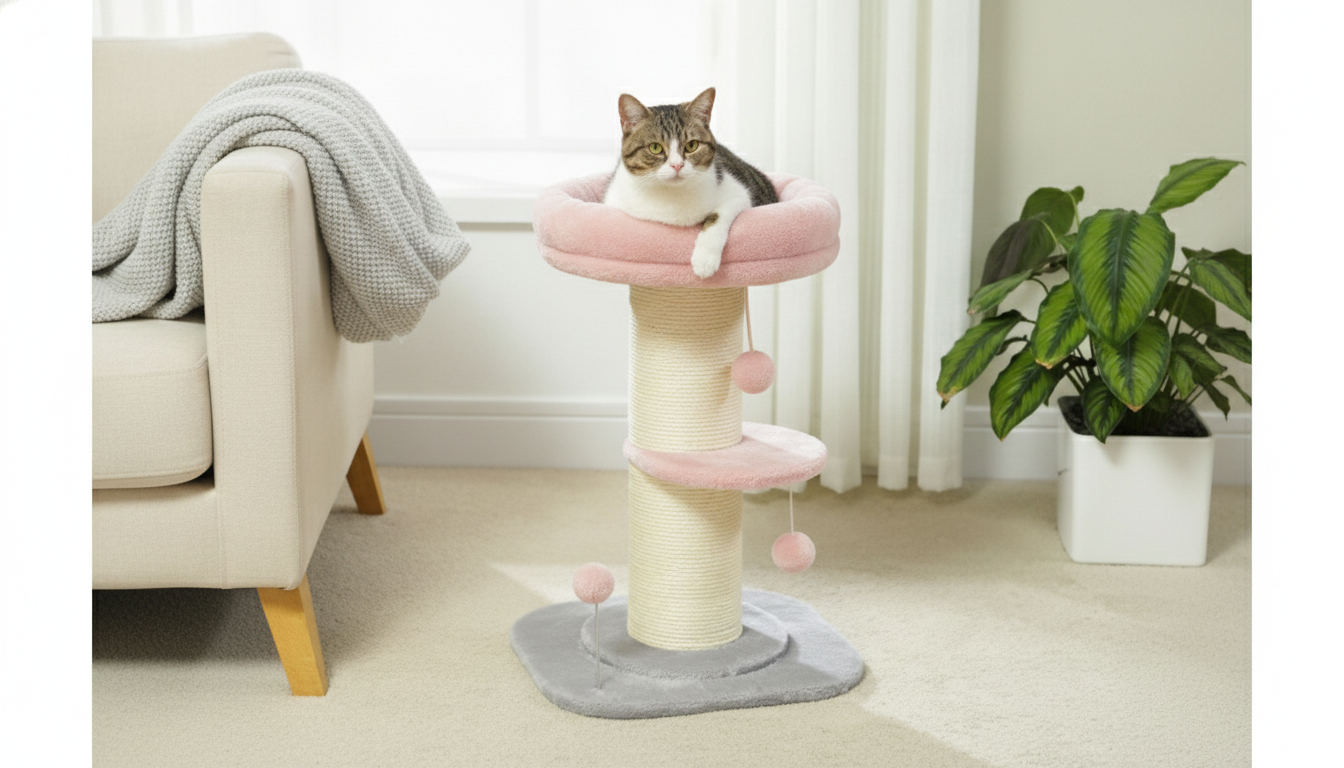
Pink Flower Cat Tree with Thick Sisal Scratching Post & Removable Perch
A compact cat tree can make a big difference in daily enrichment—offering a dedicated place to scratch, perch, and lounge while helping protect furniture. This flower-inspired design pairs a thick sisal scratching post with a removable perch for easy refreshes and flexible comfort in small rooms, apartments, or cozy corners.
If you’re looking for a cute, functional station that supports natural behaviors without taking over the room, consider the Pink Flower Cat Tree with Thick Sisal Scratching Post & Removable Perch.
What Makes This Flower Cat Tree Different
This style focuses on the everyday basics cats actually use—scratch, climb, then settle—while keeping the overall look soft and decor-friendly.
- Flower-inspired look that blends into playful, modern, or pastel home décor.
- Thick sisal-wrapped scratching post built to handle frequent, full-body stretches.
- Removable perch for easier cleaning, swapping, or repositioning.
- Compact footprint that fits beside a sofa, desk, or window without dominating the room.
- Designed for daily use: scratch → climb → rest in one simple setup.
Cats often prefer “simple and consistent” over complicated towers—especially in smaller homes where you want one reliable spot that’s always available.
Comfort and Enrichment: Perch, Play, and Rest
Perching isn’t just cute—it supports how cats like to relax. Many cats enjoy being slightly elevated so they can watch what’s happening while still feeling secure.
- Observation and safe-zone lounging: A perch encourages calm downtime, especially for indoor cats that want a predictable vantage point.
- Reduced competition: A dedicated rest spot can help minimize crowding when placed in a quiet, low-traffic area.
- Familiar comfort: Add a small blanket or familiar-scent item (if safe) to encourage quick adoption.
- Flexible placement: Place near a window for visual stimulation, or near the family area for social cats that like to be “in the mix.”
If your cat is hesitant at first, set the tree where they already like to hang out, then let curiosity do the work. A few tossed treats onto the perch can turn it into a favorite spot fast.
Scratching Benefits: Why Thick Sisal Matters
Scratching is normal and necessary—it helps cats maintain claws, stretch shoulders and backs, and leave scent cues. The goal isn’t to stop scratching; it’s to give a better option than the couch.
- Texture that feels right: Sisal has a rough weave many cats prefer, which helps redirect scratching away from carpets and sofa corners.
- Stability encourages use: A thicker post typically feels more secure under pressure, which can help cats commit to upright scratching.
- Better habits through better placement: Position the cat tree where scratching “incidents” usually happen to improve consistency.
For deeper behavior guidance, these resources offer practical, cat-first explanations: ASPCA—Cat Scratching Behavior and International Cat Care—Scratching in Cats.
Sizing and Placement Tips for Real Homes
In apartments and small rooms, where you put a cat tree matters as much as the tree itself. The best placement is the one your cat will actually use every day.
- Leave turning room: Choose a spot with enough clearance for your cat to step onto the perch and turn around comfortably.
- Start easy for cautious cats: Begin with the perch at an easy-to-reach height and pair with treats or catnip (if your cat responds well).
- Skip stressful zones: Avoid placing it near loud appliances if your cat is noise-sensitive.
- Support different scratch styles: If your cat scratches horizontally, add a flat scratcher nearby while they learn the post.
Quick Setup and Placement Checklist
| Goal | Where to Place It | Small Adjustment That Helps |
|---|---|---|
| Redirect furniture scratching | Beside the scratched sofa/chair edge | Rub a little catnip on the sisal (optional) |
| Encourage daily lounging | Near a window or calm corner | Add a soft, washable topper on the perch |
| Reduce multi-pet tension | Away from food/litter routes | Provide a second resting spot elsewhere |
| Help shy cats feel secure | Near a wall, not in the center of a room | Keep the area predictable and quiet |
Cleaning, Maintenance, and Longevity
A well-maintained cat tree stays more appealing, lasts longer, and keeps your home tidier.
Who This Cat Tree Suits Best
For homes with both cats and dogs, coordinating pet furniture can help the space feel calmer and more organized. If you’re also setting up a designated area for dogs, the 59″ Wooden Dog Crate Furniture for 2 Dogs, Double Rooms with Drawers & Divider is a structured option that keeps pet zones defined.
FAQ
How do cats learn to use a scratching post instead of the couch?
Place the cat tree next to the spot your cat already scratches, then reward any interaction with the sisal (praise or a treat). Temporarily make the couch less appealing with a cover or approved deterrent, and keep the post stable and easy to reach.
Is a removable perch safe and sturdy for daily use?
Yes, removable perches are designed for routine use when properly attached. Check fasteners when you clean it, and keep the cat tree on a flat, level surface so it doesn’t wobble during jumping or stretching.
Where is the best place to put a cat tree in an apartment?
A quiet corner near a window or in a room your cat spends time in tends to work best, as long as it’s away from loud appliances and heavy litter-box traffic. Consistent placement helps your cat treat it as their regular scratch-and-rest station.








Leave a comment