5500W Tankless Electric Water Heater for Fast Sink Hot Water
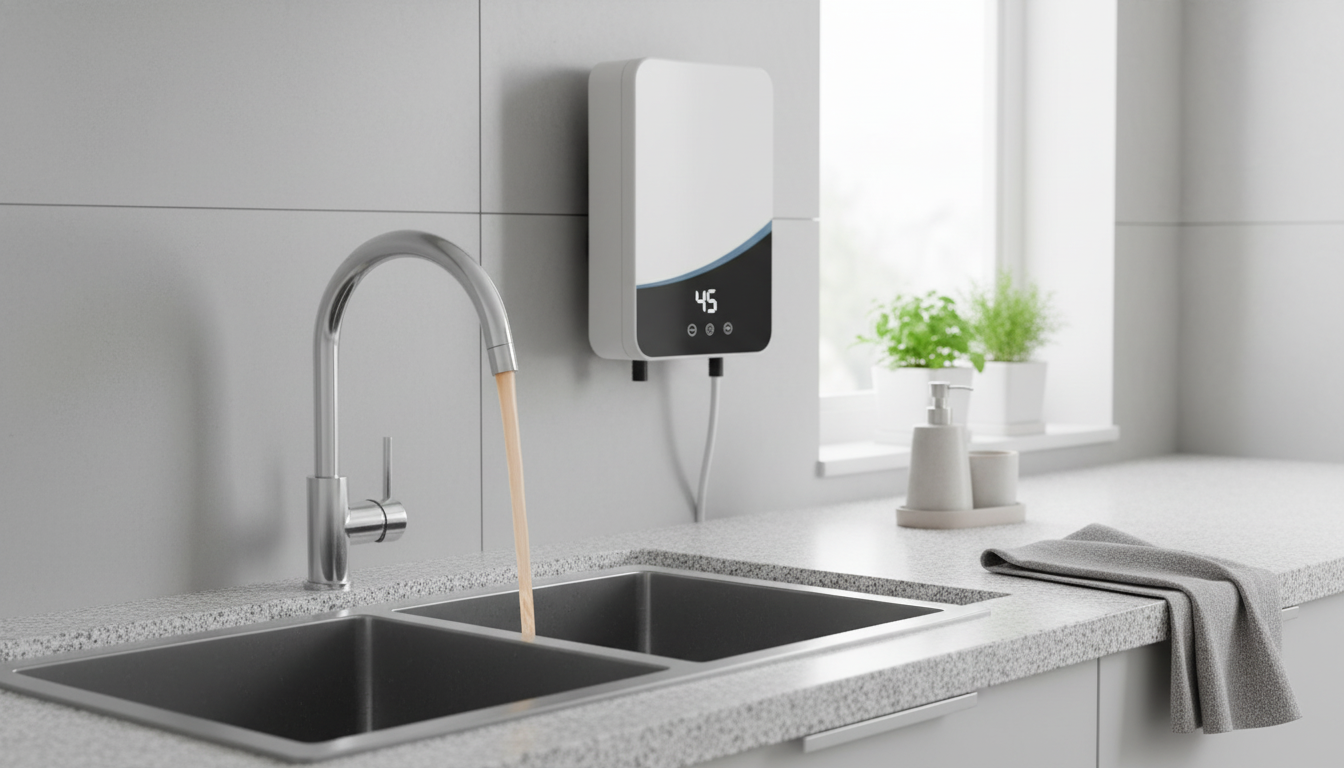
Tankless Electric Hot Water Heater 5500W: Fast Hot Water for Sinks, Studios, and Small Spaces
A 5500W tankless electric unit delivers hot water on demand without storing it in a tank, making it a practical upgrade for point-of-use applications like bathroom sinks, bar sinks, workshops, and small apartments where space and standby heat loss matter. Instead of waiting for hot water to travel from a distant water heater, a compact heater mounted near the fixture can shorten wait times and reduce the “cold-water purge” that often gets wasted down the drain.
What a 5500W Tankless Electric Heater Is Best For
A 5500W point-of-use heater is designed to shine in single-fixture scenarios where convenience and compact sizing matter more than high-flow output.
- Point-of-use hot water at a single fixture (sink, prep station, utility basin)
- Small-space installs where a bulky tank won’t fit (vanities, cabinets, closets)
- Reducing wasted energy from keeping a storage tank hot all day
- Shorter hot-water wait times when mounted close to the faucet
If the goal is comfortable handwashing water, quick rinsing, and better day-to-day convenience at one location, 5500W is often a sweet spot between performance and manageable electrical planning.
How Instant Heating Works (and Why Flow Rate Matters)
Tankless electric heaters warm water as it passes through a heating chamber. When a tap opens, sensors detect flow and the heater ramps power to raise the water temperature in real time. Because there’s no stored volume, the heater’s “limit” is not gallons in a tank—it’s how much temperature rise it can deliver at a given flow rate.
- Water passes through a heating chamber; power ramps up as a tap opens
- Outlet temperature depends on incoming water temperature, flow rate, and wattage
- Lower flow increases temperature rise; higher flow reduces temperature rise
- For cold climates, a modest flow setting often delivers steadier warmth than trying to run multiple fixtures at once
Practical Expectations for a 5500W Point-of-Use Heater
| Use case | Typical flow demand | What to expect |
|---|---|---|
| Bathroom handwashing | Low | Comfortable warm water with stable output when flow is modest |
| Kitchen rinsing | Low–medium | Best results when kept to one faucet at a time |
| Shower supply | Medium–high | May be limiting depending on incoming water temperature and desired shower temp |
| Two fixtures at once | High | Not recommended for consistent temperature |
Incoming water temperature is the variable many shoppers underestimate. In warmer regions, a 5500W heater can feel impressively “instant.” In colder regions, it may still deliver pleasant sink water, but it can struggle to sustain hotter temperatures at higher flows.
Electrical Requirements to Plan Before Buying
Electric tankless heaters concentrate a lot of power into a small box, so planning the electrical side is essential. A 5500W unit typically requires a dedicated circuit, and the breaker size and wire gauge must match the heater’s nameplate requirements and local code.
- Confirm available voltage and panel capacity; a 5500W unit typically requires a dedicated circuit
- Match breaker size and wire gauge to the heater’s nameplate and local electrical code
- Plan for an accessible disconnect or shutoff method if required by code
- If upgrading wiring or adding a circuit, use a licensed electrician
When comparing options, remember that “it turns on” isn’t the same as “it’s correctly protected.” Proper overcurrent protection and conductor sizing help the heater perform reliably while reducing nuisance trips and overheating risk.
Installation Considerations for Reliable Performance
Point-of-use performance depends heavily on placement and water conditions. The closer the heater is to the faucet, the less heat is lost in long pipe runs—and the less time you spend waiting for warmed water to arrive.
Operating Costs and Efficiency Basics
For background reading on demand-style water heating, the U.S. Department of Energy offers a helpful overview: Tankless or Demand-Type Water Heaters. For household hot-water safety, scald prevention guidance from the U.S. Consumer Product Safety Commission is a useful reference: Hot Water Scalds.
When to Choose a Higher-Power or Whole-Home Unit Instead
Product Spotlight: Tankless Electric Hot Water Heater 5500W
If the goal is fast, on-demand hot water at a sink without sacrificing space, the Tankless Electric Hot Water Heater 5500W is designed to cover point-of-use needs while keeping installation compact. It’s a solid match for single-fixture setups in small living spaces, utility areas, or workspaces where running a long hot-water line is inconvenient.
Quick Specs to Confirm Before Install
| Detail | What to verify |
|---|---|
| Power | 5500W and compatible supply voltage |
| Circuit | Dedicated breaker and correct wire gauge per code |
| Placement | Close to the fixture; protected from freezing and splash exposure |
| Water quality | Hardness level and whether a descaling plan is needed |
More Small-Space Comfort Options
- Tankless Electric Hot Water Heater 5500W — point-of-use hot water for sinks and small utility setups.
- 2-3 Person Low EMF FAR Infrared Sauna with Tempered Glass and App Control — a premium wellness add-on for dedicated indoor spaces.
FAQ
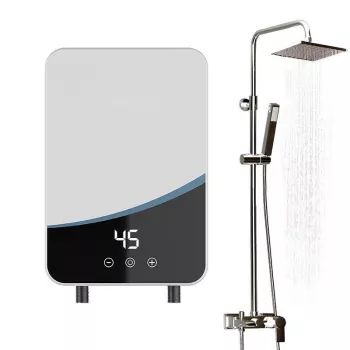
Can a 5500W tankless electric heater run a shower?
It depends on incoming water temperature and the shower’s flow rate. A 5500W unit is typically strongest for sinks and point-of-use use; shower performance may feel limited in colder climates or when higher flow is needed.
Does a tankless electric heater need a dedicated circuit?
Most units at this wattage require a dedicated circuit. Always match the breaker size and wire gauge to the heater’s nameplate and local electrical code, and use a licensed electrician if you’re unsure.
How often should a tankless electric heater be descaled?
In hard-water areas, descaling every 6–12 months is a common, practical range. If you notice reduced temperature rise or weaker flow, mineral buildup may be a sign maintenance is due sooner.









Leave a comment