Holiday Hosting Checklist: Menu, Timeline & Shopping Plan
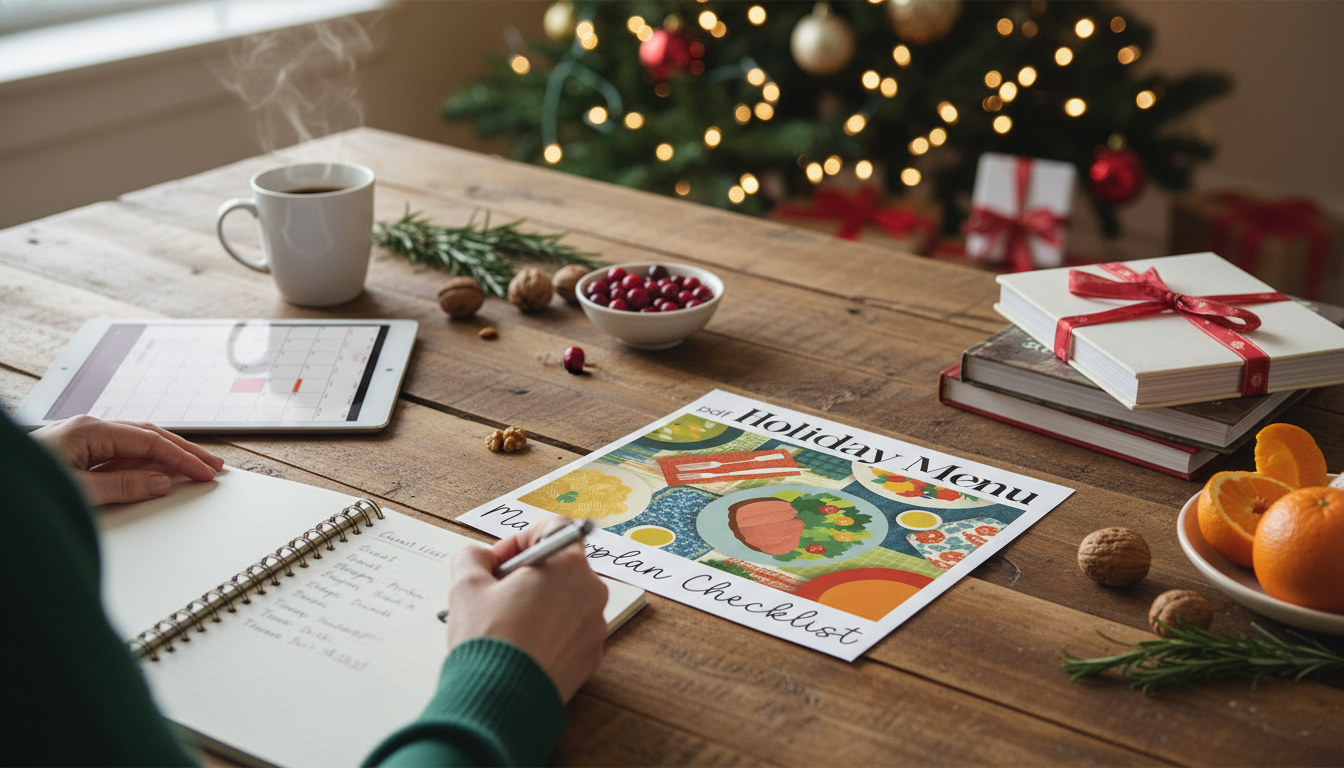
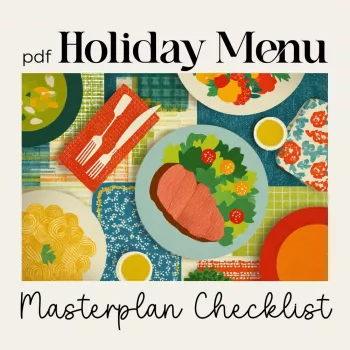
Holiday Menu Masterplan: A Printable Checklist for Stress-Free Hosting
A calm holiday kitchen starts with a clear plan: the dishes, the timing, the shopping, and the prep you can do ahead. A masterplan-style checklist keeps the menu balanced, the oven schedule realistic, and the hosting details handled—so the day feels festive instead of frantic.
Start with the big picture: guests, vibe, and constraints
Before picking recipes, lock in the basics that shape every other decision. The fastest way to create extra work is planning a menu that doesn’t match your guest needs or your kitchen’s capacity.
- Confirm headcount and needs: ask about allergies, dietary preferences, and must-have traditions (signature dishes, cultural staples, dessert expectations).
- Choose the meal style: plated, family-style, buffet, or grazing. This changes portioning, servingware, and how long food can sit.
- List kitchen limits: oven size, burner count, fridge space, serving platters, and seating.
- Be honest about help: a solo host should plan fewer “high-attention” dishes than a group that cooks together.
If you want everything in one place (menu + timeline + shopping + prep notes), the Holiday Menu Masterplan Checklist (printable planner) is designed to keep decisions organized from the first draft to leftover labels.
Build a balanced menu that cooks well together
Great holiday menus aren’t just delicious—they’re coordinated. The goal is to avoid “oven traffic,” last-minute stovetop chaos, and dishes that peak at different times.
- Anchor with one main (protein or vegetarian centerpiece), then add sides that use mixed methods (roast + stovetop + no-cook) to prevent bottlenecks.
- Mix textures and flavors: something crisp, something creamy, something bright/acidic, and something savory-herby.
- Protect day-of time: include at least one make-ahead appetizer and one make-ahead dessert.
- Choose “hold-friendly” dishes: prioritize items that stay great for 20–40 minutes covered or warmed.
| Category | Aim | Examples |
|---|---|---|
| Main | 1 centerpiece protein or vegetarian main | Roast turkey, ham, stuffed squash |
| Starch | 1–2 comforting options | Mashed potatoes, stuffing, rolls |
| Vegetables | 2–3 with contrast | Roasted carrots, green beans, salad |
| Bright element | Cut richness | Cranberry sauce, citrus salad, pickles |
| Appetizer | Serve with minimal last-minute work | Cheese board, dip, deviled eggs |
| Dessert | 1 showpiece + 1 easy option | Pie + cookies, cake + fruit |
Turn the menu into a timeline (the real secret)
Recipes are only half the plan; the timeline is what makes the day run smoothly. Build your schedule around oven space, resting time, and dishes that can be finished early.
- Assign each dish a cook method and a hold window (how long it can sit and still be great).
- Spot make-ahead wins (1–7 days): sauces, dressings, cookie dough, pie crust, chopped veggies, compound butter.
- Create an oven schedule: list temperatures, rack positions, and bake times; group items that share temps.
- Script the last 60 minutes: what’s on the stove, what’s in the oven, what’s being plated, and who can help.
Holiday meal prep timeline (editable plan)
- 7–5 days before: finalize menu + assign dishes; confirm dietary needs; choose 1–2 make-ahead items.
- 4–3 days before: shop pantry + nonperishables; grab foil, parchment, storage containers, beverages.
- 2 days before: chop prep + make sauces/dressings; label containers; clear fridge shelves for trays.
- 1 day before: bake desserts + pre-cook components; toast nuts; par-cook veggies; set table if possible.
- Morning of: set up stations + start long cooks; print the timeline; pull platters; preheat on schedule.
- Last hour: reheat/finish + carve + plate; keep a “hot holding” spot; warm plates if needed.
Create a shopping list that actually matches the plan
Prep smarter: set up a calmer kitchen workflow
If pets get underfoot during arrivals and plating, a dedicated “quiet zone” can keep things smoother. For homes that want a furniture-style option, consider the 59″ Wooden Dog Crate Furniture for 2 Dogs, Double Rooms with Drawers & Divider as a way to reduce door-dashing and kitchen congestion.
Printable planner: keep every moving part in one place
To keep the planning simple and reusable, the Holiday Menu Masterplan Checklist (printable planner) is a quick add-to-cart that you can print again for future gatherings.
Common day-of pitfalls (and quick fixes)
For food safety basics during holidays—especially cooling, storing, and reheating—use authoritative guidance from the USDA Food Safety and Inspection Service and the FDA holiday food safety page.
A couple of “nice-to-have” extras for hosting days
- Hands-free errands and arrivals: the Luxury Large Capacity Bowling Shoulder Bag with Sausage Dog Pendant is a roomy grab-and-go option for last-minute store runs, serving tools, or a change of outfit.
- Post-host reset: after cleanup, a quiet wind-down can make the next day better. The 2-3 Person Low EMF FAR Infrared Sauna with Tempered Glass and App Control is a comfort-focused upgrade for home recovery after a long day on your feet.
FAQ
How far ahead can holiday dishes be prepped?
Most sauces and dressings can be made 3–5 days ahead, chopped veggies 1–2 days ahead, and many desserts 1–3 days ahead. Casseroles are often best assembled 1 day ahead, and some components (like cookie dough or stock) can be freezer-friendly for up to a month—just label everything with dates and reheating notes.
How many dishes are realistic for one host?
A dependable formula is 1 main, 2–3 sides, 1 bright element, 1 make-ahead appetizer, and 1 dessert. Scale up only if your oven/stove capacity supports it and you have reliable helpers assigned to specific tasks.
What’s the easiest way to avoid an oven bottleneck?
Build an oven schedule and choose sides that use mixed cooking methods (stovetop, no-cook, or slow cooker) so the oven is reserved for the centerpiece. Pick dishes that hold well and reheat in batches instead of trying to finish everything at the same moment.











Leave a comment