Reflect & Rise: Practical Self-Reflection That Creates Habits
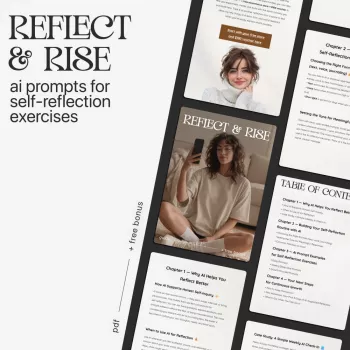
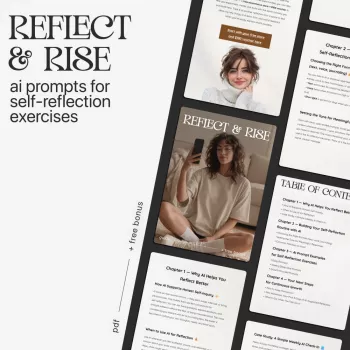
Reflect & Rise: A Self-Reflection Guide That Turns Insights Into Action
Reflection can be motivating, but it can also feel vague: lots of thinking, not much change. Reflect & Rise is built to make self-reflection practical—using guided journal prompts, a printable checklist, and AI-friendly structure to help turn patterns into decisions, and decisions into small, repeatable habits. This digital download is designed for quick sessions, honest review, and measurable progress without overcomplicating the process.
When reflection is structured, it becomes less about reliving your week and more about learning from it. That shift matters: research-backed resilience skills emphasize adaptive thinking and intentional coping, not just “processing feelings.” (See the American Psychological Association’s guidance on resilience.)
What Reflect & Rise Helps You Do (Without Getting Stuck in Overthinking)
Reflect & Rise is designed to keep you moving—gently, but consistently—so reflection leads to choices you can actually carry out.
- Move from “How do I feel?” to “What does this mean for my next step?”
- Spot recurring patterns: triggers, energy drains, and repeat wins
- Clarify priorities by separating urgent noise from meaningful goals
- Create a realistic action plan for the next day, week, and month
- Build a consistent reflection habit with a simple structure that is easy to repeat
Instead of aiming for a dramatic “new you” moment, the guide focuses on tighter feedback loops: review what happened, name the lesson, and run a small experiment. Over time, those experiments compound into trust—because you do what you said you’d do.
What’s Included in the Digital Download
This digital set is meant to be used the way real life happens: in short windows, between obligations, with imperfect energy. You’ll get structure without rigidity.
- eBook-style guide that walks through reflection cycles (review → insight → action)
- Printable checklist to keep sessions consistent and focused
- Mindset and growth journaling prompts designed to reduce blank-page paralysis
- AI-ready formatting cues that make it easy to copy sections into an AI chat for deeper analysis
- Instant access as a digital download—no shipping, no waiting
Quick view: Components and how to use them
| Component | Best for | Suggested time |
|---|---|---|
| Guide (eBook) | Learning the reflection flow and staying on track | 15–30 minutes (first read), then reference as needed |
| Printable checklist | Keeping sessions consistent and short | 3–5 minutes to review + 10 minutes to reflect |
| Journal prompts | Getting unstuck, naming patterns, clarifying choices | 10–20 minutes |
| AI-assisted reflection cues | Turning notes into themes, next steps, and reframes | 5–15 minutes |
A Simple Weekly Rhythm: Reflect, Refocus, Rise
Consistency beats intensity. A lightweight rhythm prevents the common cycle of “skip all week, then overthink for two hours on Sunday.”
- Daily (5–10 minutes): quick check-in—energy level, mood, one win, one friction point
- Midweek (10–15 minutes): identify the one bottleneck that keeps repeating and choose one experiment to test
- Weekly review (20–30 minutes): scan patterns, highlight what worked, decide what to stop doing
- Monthly reset (30–45 minutes): revisit values, adjust goals, and simplify commitments
- Keep changes small: one habit upgrade and one boundary per week is enough to create momentum
If you’re using the guide as a weekly reset, a helpful rule is: no more than two “improvement targets” at a time. More than that usually turns reflection into pressure—then avoidance.
Using AI as a Reflection Partner (Practical and Grounded)
AI works best here as a mirror and an organizer, not a decision-maker. The goal is to reduce mental clutter so you can choose the next right step.
One simple way to “lock in” follow-through is implementation intentions—pre-deciding what you’ll do in a situation that tends to derail you. (See James Clear’s overview of implementation intentions.)
Journal Prompts That Lead to Decisions (Not Just Thoughts)
For extra traction, end your session with a “mistake-to-method” translation: what did the situation teach you about your process? Harvard Business Review emphasizes the value of extracting lessons rather than defaulting to self-criticism (see How to Learn From Your Mistakes).
Who This Guide Fits Best
How to Get the Most Value From the Printable Checklist
Reflect & Rise — Digital Download
If you want a reflection system that’s structured but not heavy, start here: Reflect & Rise — Self-Reflection Guide with AI (digital download). It includes the self-reflection guide, printable checklist, and growth-focused journal prompts, and it’s designed to work with or without AI.
To support the habit you’re building, pairing reflection with a simple “reset ritual” can help—something that signals closure on the day and makes it easier to follow through tomorrow. If you’re creating a calm corner at home, consider adding a restorative recovery tool like the 2-3 Person Low EMF FAR Infrared Sauna with Tempered Glass and App Control. And if you like taking your planning on the go, a roomy everyday carry option such as the Luxury Large Capacity Bowling Shoulder Bag with Sausage Dog Pendant can make it easier to keep a notebook, printed pages, or a tablet close at hand.
FAQ
How long should a reflection session take to be effective?
Daily reflection can be effective in 5–10 minutes, while a weekly review typically works best in 20–30 minutes. Consistency matters more than length, and the checklist and prompts help keep sessions focused.
Do you need to use AI for this guide to work?
No—Reflect & Rise works fully without AI. AI is optional and can be used to summarize notes, spot themes, and generate a few realistic next-step experiments.
Is this a physical product or a digital download?
It’s a digital download with instant access, including an eBook-style guide and printable pages. You can print the checklist or annotate the files on a tablet, depending on your preferred routine.











Leave a comment